Mahindra's Acquisition of Mitsubishi Agricultural Machinery: A Legacy Redefined
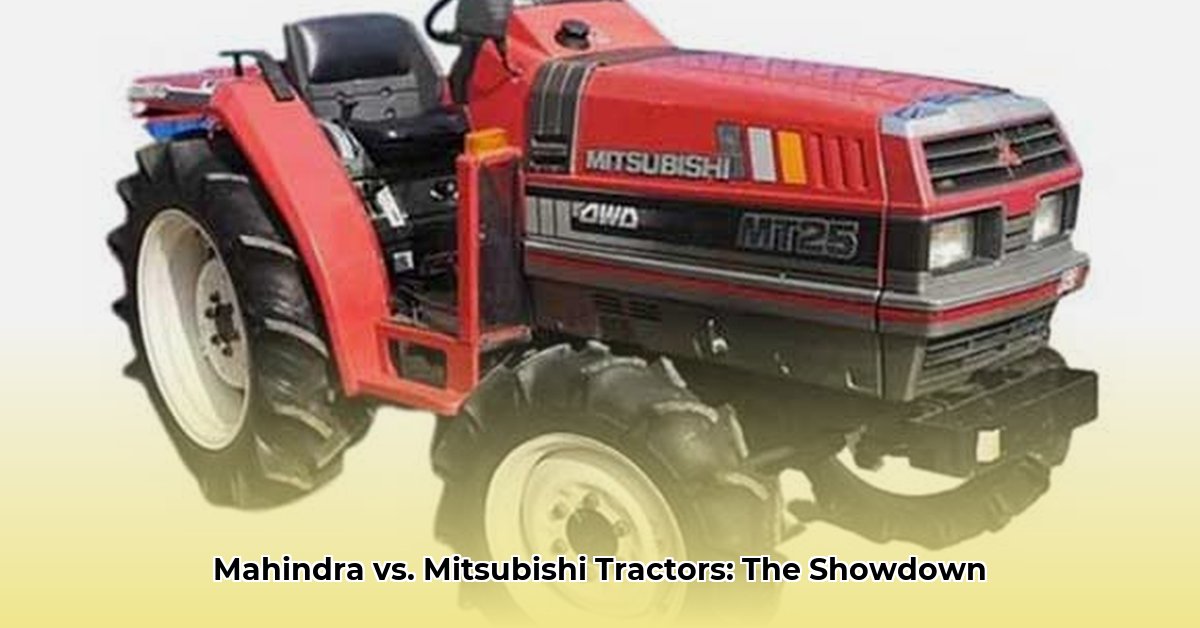
Mitsubishi tractors: once synonymous with speed and efficiency on large farms, their story took a dramatic turn with Mahindra & Mahindra's (M&M) acquisition in 2015. This merger presents a compelling case study in global agricultural machinery, blending legacy with strategic ambition and raising crucial questions about the future of this iconic brand. While Mitsubishi's past is well-documented, the present, under Mahindra's ownership, remains less transparent. This article explores the available information, offers reasoned speculation, and highlights the need for further research to fully comprehend the impact of this significant acquisition. For more information on Mahindra tractors, check out Mahindra Tractors.
The legacy of Mitsubishi agricultural machinery, dating back to 1971, is one of robust performance and reliability. Farmers appreciated their speed – capable of reaching up to 26 kph – and their efficiency. But the acquisition by M&M, an Indian automotive giant, irrevocably changed the trajectory of the brand. This raises critical questions: Will Mitsubishi retain its distinct identity, continuing to emphasize its legacy of speed and efficiency, or will it be integrated into Mahindra's existing lineup, potentially seeing a gradual phase-out of the Mitsubishi brand? Where does this leave farmers, the end-users of these machines?
Why is detailed information about current Mitsubishi tractor models scarce? The lack of readily available data—on current production numbers, sales figures, or detailed technological specifications—presents a significant challenge. Publicly available information is limited, leaving much to speculation. This absence of detailed facts prevents a comprehensive analysis of the current market position of Mitsubishi tractors post-acquisition.
One can speculate several scenarios. Mahindra might leverage Mitsubishi's strong brand reputation, focusing on existing loyal customers. Alternatively, a phased integration into the Mahindra brand is possible, streamlining production and potentially reducing costs. A third possibility is that Mahindra might maintain the Mitsubishi brand for high-end models while integrating some technologies into their wider range. The impact for farmers is equally uncertain. Improved parts availability or more competitive pricing are potential upsides, but these benefits are not guaranteed.
Unveiling the Uncertainties: A Stakeholder Perspective
The lack of transparency underscores the need for comprehensive research. Key areas warrant further investigation, including an analysis of Mahindra's post-acquisition strategic plans; detailed specifications of current Mitsubishi tractor models; an evaluation of Mahindra's commitment to sustainability in agricultural practices; and a comparative analysis of Mitsubishi's performance against competitors like John Deere and Kubota. This is crucial for a complete understanding of the long-term effects.
Consider the following key areas of uncertainty:
- Impact on Farmers: Will prices increase? Will parts become harder to source? Will technological innovations deliver tangible benefits?
- Mahindra's Strategy: Will Mitsubishi's brand identity persist? Will Mahindra integrate Mitsubishi's technology effectively? Will this lead to increased market share and profitability, or will it dilute the brand?
- Competitive Landscape: Will Mahindra's acquisition disrupt the market? How will competitors react to this shift in dynamics?
Mahindra's Acquisition: Unpacking the Impact on Market Share
Mahindra's 2015 acquisition of a substantial stake in Mitsubishi Agricultural Machinery (MAM) was a strategic move, aiming for technology access and market expansion rather than immediate market share gains. The acquisition cost M&M $25 million, a significant investment reflecting their long-term vision. However, precisely quantifying the impact on Mitsubishi's market share following the acquisition proves difficult. Public data is limited, obscuring a clear picture of their post-acquisition performance.
M&M's dominant position in the Indian tractor market (over 95% in some years) complicates matters. This makes it challenging to isolate and analyze Mitsubishi's independent market performance. Analyzing the merger's impact requires considering potential synergies between the brands, such as increased technological advancements, expansion into new markets, and improved brand image.
While precise figures on Mitsubishi's market share remain elusive, certain indicators provide insight. For instance, M&M's FY24 export figures show a significant decline (over 20%). This suggests that the acquisition hasn't automatically translated into global market dominance. Further research is crucial to gain a complete understanding of the long-term consequences.
Key Takeaways:
- Mahindra's acquisition was a strategic play focused on technology and expansion, not immediate market share gains.
- Precise data on Mitsubishi's post-acquisition market share is currently unavailable.
- M&M's export challenges signify the complexity of the international agricultural equipment market and suggest the integration of Mitsubishi hasn't yet led to immediate global success.
- Further research is needed to fully interpret the acquisition's long-term effects.